
Thumb Sucking

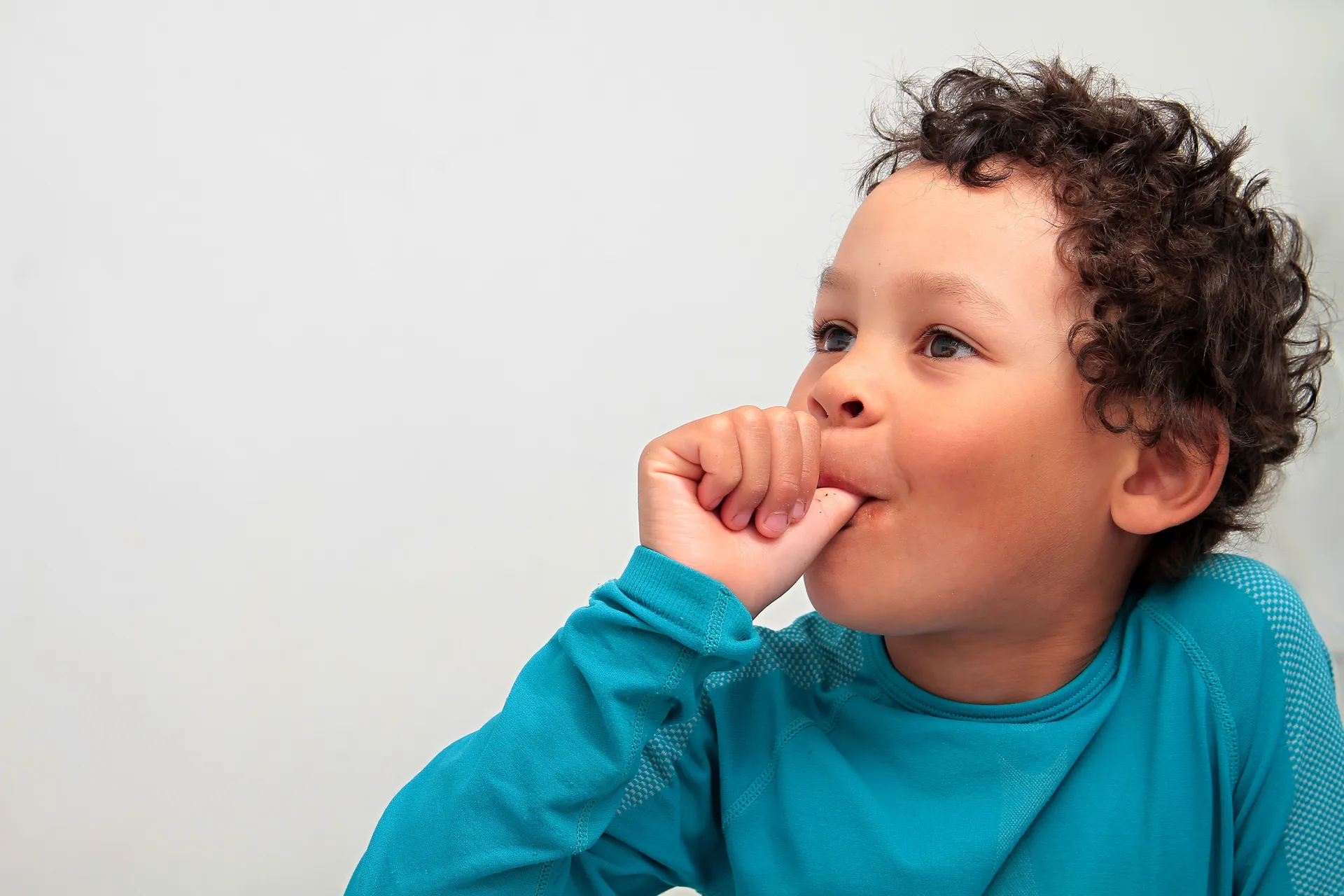
Thumb sucking is a natural, comforting habit in babies and toddlers, but if it continues once the adult teeth start coming through (usually around age 5–6), the ongoing pressure can push the teeth and jaws out of position. The most common effects are an anterior open bite (front teeth that don't meet), an increased overjet (upper front teeth pushed forward), a narrowed upper jaw and sometimes a crossbite.
How much impact thumb sucking has depends on how often, how long and how forcefully a child sucks. The occasional sucking of a toddler is rarely a concern, but a persistent, intense habit in an older child is far more likely to affect the position of the teeth and the way the jaws develop, and can also affect speech.
The good news is that if the habit stops early enough, the teeth and jaws often correct themselves. Where a child needs help, gentle encouragement, reminders or a simple habit-breaking appliance fitted by an orthodontist can make all the difference, and where the bite has already been affected, braces or clear aligners can correct it once the time is right. Our specialist orthodontists in Dublin can assess your child's teeth and advise on the best approach. Book a consultation to get started.
FAQs
Most children stop of their own accord between two and four. It only becomes an orthodontic concern if it is still going when the adult front teeth arrive, at around five or six.
Before that it is a normal comfort behaviour and not something to worry about. There is more on our thumb sucking page.
A thumb held between the front teeth for hours a day does three things at once. It stops the front teeth meeting, producing an open bite. It pushes the upper front teeth forward, increasing the overjet. And the cheeks squeezing inward during sucking narrows the upper jaw over years, which can produce a crossbite at the back.
How much of that happens depends on how often, how long and how forcefully. A few minutes at bedtime does far less than a vigorous habit kept up through the day.
From an orthodontic point of view a dummy has one practical advantage: you can take it away. A thumb is always available, which makes the habit harder to break and means it often carries on longer.
While the habit continues the effect on the bite is broadly similar. What matters more than which one is how long it goes on and how intense it is.
Gently, and with the child on side. Nagging tends to entrench the habit, because it is usually a comfort behaviour rather than a deliberate one.
What generally works: reward charts, a plaster or a glove at night, and involving the child in the decision so it is theirs rather than yours. Pick a settled period rather than a stressful one.
Where none of that succeeds and the bite is being affected, a small fixed appliance behind the upper front teeth removes the satisfaction of sucking without punishing the child. Most stop within weeks.

Book a Consultation
Discuss your goals with one of our specialist orthodontists to find out what treatment option suits you best.
Begin Your Journey
Thinking about it? Book your first consultation and come see us — we'll take it from there.