


Braces for adults in Dundrum
There is no age limit on straightening your teeth. A good proportion of the patients we see at our Ballinteer Road clinic are adults, many of them people who were never offered treatment as teenagers, or who had braces years ago and have seen their teeth drift since.
Adults tend to worry about how visible treatment will be. That is a fair concern and it shapes what we recommend. Your options include:
- Clear aligners, Invisalign or Spark, removable and close to invisible in normal conversation.
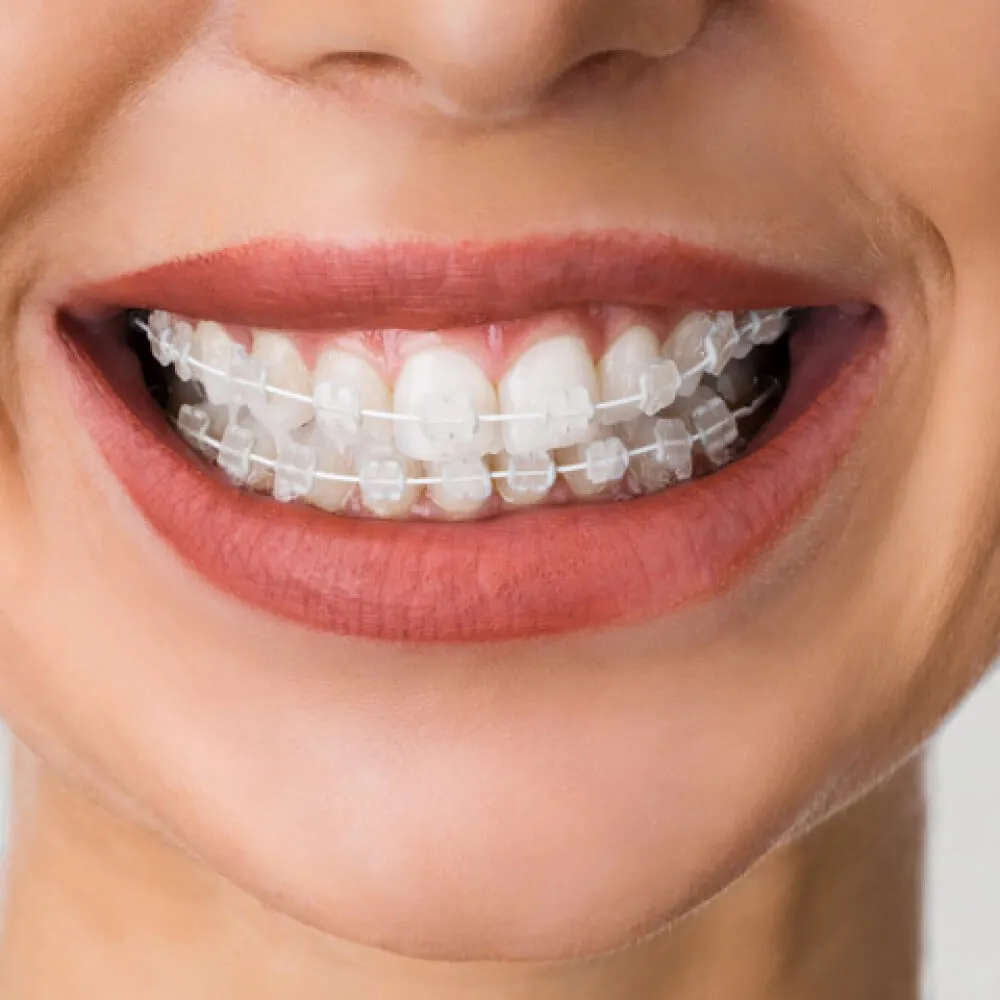
- Ceramic braces, fixed brackets in a tooth-coloured material, far less noticeable than metal.
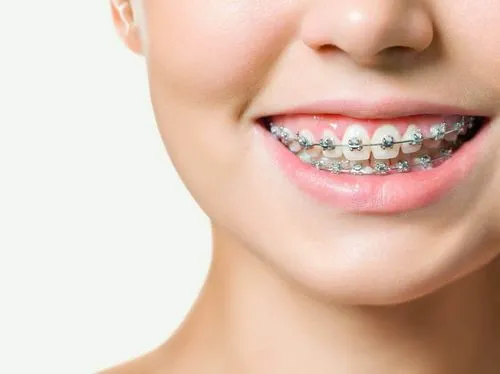
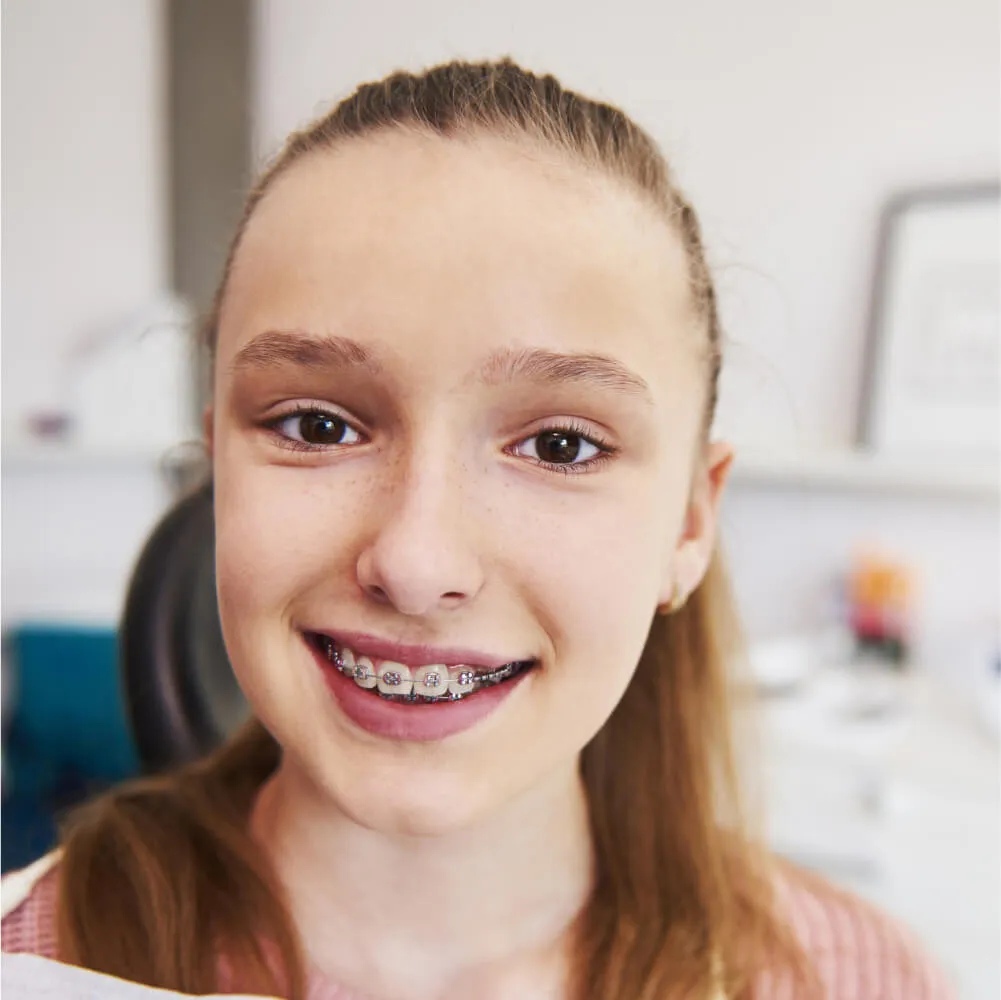
- Metal braces, still the most precise and hard-wearing option, and the most affordable.
- Braces Lite, a shorter course of six to nine months where only the front teeth need attention.
Our specialist orthodontists will look at your teeth and bite and tell you honestly which of these will actually achieve what you want, rather than steering you towards one.
Book a consultation to talk it through.

How adult treatment works
The mechanics are the same at any age. Gentle, steady pressure moves teeth through the bone into better positions, whether that pressure comes from a fixed brace or a sequence of aligners.
What differs in adults is the surrounding tissue. Your jaw has finished growing and the bone is denser, so movement can be a little slower than in a teenager and some bite corrections that would be straightforward in a growing child need a different approach. Adults also tend to have fillings, crowns or missing teeth to work around, and gum health needs to be sound before treatment starts.
None of that makes adult treatment harder to plan, it just makes the assessment matter more. We take a digital scan at your first visit so you can see the projected result before committing to anything.
Book a consultation at our Dublin 16 clinic.
What do adult braces cost?
The fee depends on the treatment you choose and how much movement your teeth need, so we give you a precise figure after your consultation rather than a vague range beforehand. Once we have assessed your teeth and bite, you will receive a written treatment plan with the full cost set out clearly.
Most of our adult patients spread the cost monthly, interest free, over the course of treatment. There is a 5% discount if you prefer to settle the fee in full at the start, and orthodontic treatment is tax deductible at 20%, so we will provide a completed MED 2 form for your Revenue claim.
Your fee covers everything: the appliance, all routine and emergency appointments, your first set of retainers, and retainer checks for a year after treatment finishes. There are no extras added later.
Book a consultation to get your figure.


The Process

A proper look at your teeth, bite and jaws, and a conversation about what is actually bothering you. We take your dental and medical history, examine you, and take whatever records are needed, which may include X-rays, photographs and a digital scan with our iTero.
You leave knowing what we have found and what the realistic options are, including leaving things alone where that is the right answer.

We review the X-rays, photographs and scan alongside the examination findings and put together a plan specific to you. It sets out the appliance we recommend, how long treatment should take, the fee, and any preparatory work needed first.
This is a two-way appointment. We go through the alternatives, including doing nothing, and answer whatever you want to ask before you decide anything.

Anything that needs sorting before treatment starts. Usually that means a dental cleaning and dealing with existing decay or gum disease with your own dentist, since moving teeth in an unhealthy mouth makes matters worse.
In some cases it also means creating space, either by reducing the width of teeth very slightly or, where crowding is severe, by removing a tooth.

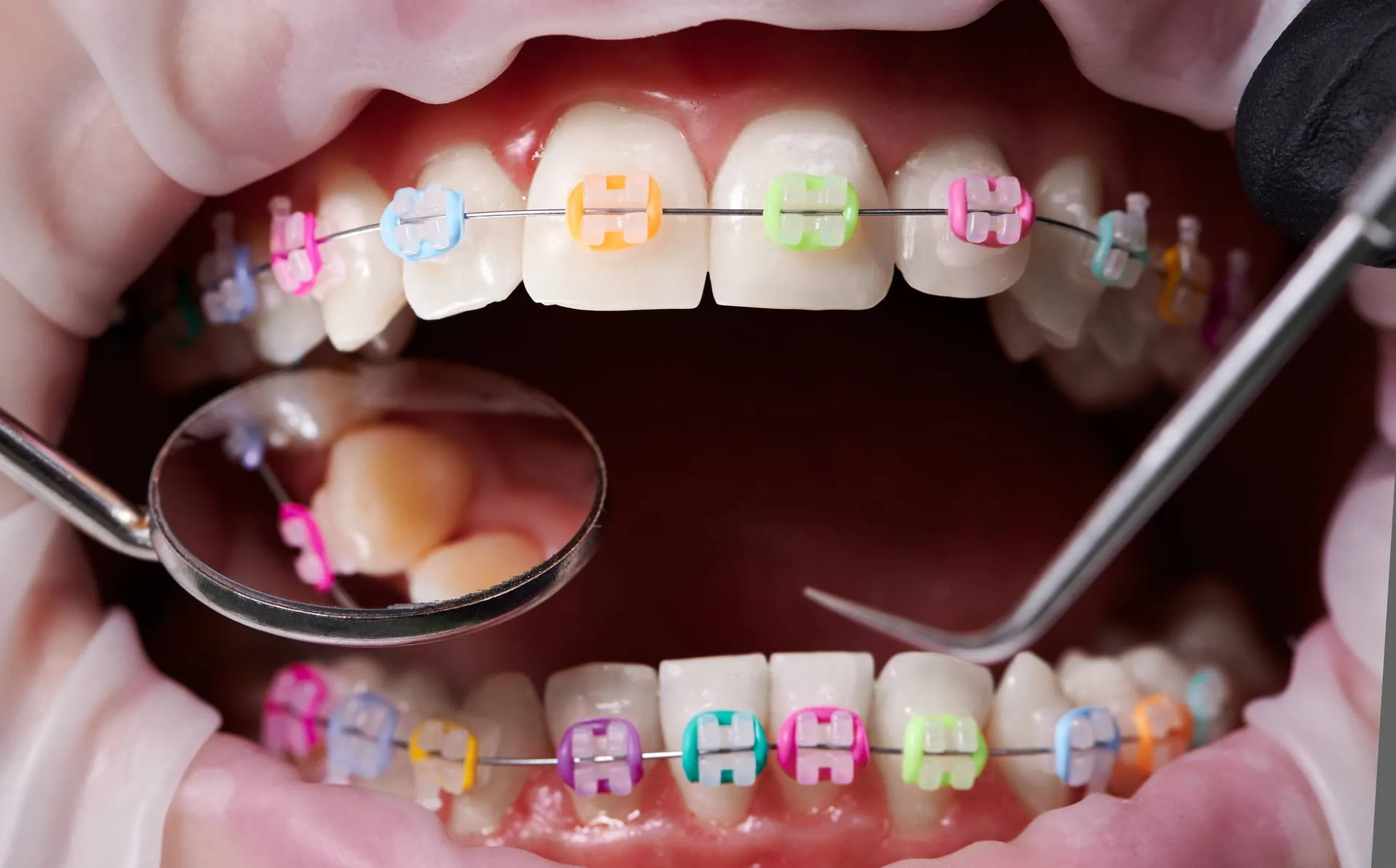
The brackets are bonded to your teeth and the wire is fitted. Nothing is drilled and no anaesthetic is needed, so the appointment is only uncomfortable in the sense of keeping your mouth open for about an hour.
Expect the teeth to feel tender for three or four days afterwards. You go home with wax for any bracket that rubs, and we go through cleaning before you leave.

You come in every six to eight weeks, usually for about twenty minutes. We change the wire, replace the elastics, check the teeth are tracking to plan and adjust where they are not.
These visits are also where we check your cleaning. Plaque left sitting around a bracket marks the enamel permanently, so it is the part worth staying on top of.

The brackets and wire are taken off and the adhesive is cleaned from the tooth surface. It is quick, painless, and usually the appointment people look forward to most.
We scan your teeth the same day, so your retainers fit the position they are in right now rather than where they were a fortnight ago.

Teeth drift back towards where they started if nothing holds them, so retainers are the final stage of treatment rather than an optional extra. Most patients wear a clear retainer at night long term, often alongside a fine wire bonded behind the front teeth.
Retainer checks are included for a year after the braces come off. There is more on our retainers page.

Book a Consultation
Discuss your goals with one of our specialist orthodontists to find out what treatment option suits you best.
FAQs
There is no upper age limit. Healthy teeth can be moved at seventy much as at seventeen, and a growing share of our patients are adults.
What matters is not your age but the condition of your teeth, gums and supporting bone. Gum disease has to be stable before treatment starts, and existing crowns, bridges and fillings need planning around.
More on our adult braces page.
Yes. The biology is the same at any age: steady pressure, bone remodelling, teeth moving. Nothing about being an adult prevents that.
What differs is the surrounding detail. The jaw has finished growing, so bite problems caused by jaw position cannot be corrected by influencing growth the way they can in a child. Those are treated by camouflage with braces or aligners, or by surgery in significant cases.
For most people, yes. Straighter teeth are easier to clean, which matters over decades, and a corrected bite spreads chewing forces evenly rather than wearing particular teeth.
There is also the simple fact that people who have wanted it for twenty years are generally glad they stopped putting it off.
What it is not is a good idea if the motivation is somebody else's. It is a two-year commitment and it should be your decision.
Sometimes a little, but less than people expect. Adult bone is denser and the periodontal tissues respond slightly more slowly, so some movements take longer than they would in a teenager.
The bigger factor is usually the case itself. An adult with years of drift and existing dental work simply has more to sort out than a fourteen-year-old with straightforward crowding.
Most adult treatments still run eighteen months to two years.
No more than for teenagers. The teeth are tender for three or four days after fitting and briefly after each adjustment, and that is the whole of it.
Adults often report the first week as the awkward part, mostly the brackets rubbing the lip and cheek rather than the teeth themselves. Orthodontic wax deals with that until the tissues toughen up.
Very few people are ruled out entirely, but there are situations where we would not start.
Active gum disease is the main one. Moving teeth in bone that is already being lost makes things worse, so that has to be treated and stable first. Untreated decay needs sorting with your dentist beforehand. Poor cleaning is a genuine reason to delay, because plaque around brackets permanently marks enamel.
Certain medical conditions and medications affect bone turnover, so tell us what you take. We would rather postpone than start something that will not go well.
They are visible, they need careful cleaning, and hard or sticky food is out for the duration. Plaque left sitting around a bracket permanently marks the enamel, which is the one genuine risk worth taking seriously.
Treatment also takes time, eighteen months to two years, with an appointment every six to eight weeks.
And it ends in retainers, indefinitely. Anyone who tells you the result holds itself is not being straight with you.





Read what our patients say about us
"I went to so many dentists about my bite problem only to be dismissed. Dr Adriana and her team gave me a plan, I followed it, and two and a half years later I can smile, eat and bite properly."

"Two of my daughters had braces fitted by the lovely Dr. Katherine Condren. I would highly recommend her services, she was so good with my daughters, we are extremely happy with the service received and they both have beautiful smiles now."
"My bonded retainer came loose and several other practices turned me away. Dundrum Orthodontics saw me straight away and had it fixed within minutes."
"Dr Joseph O’Connor is such a skilled orthodontist. His kindness and attention to detail is outstanding. He takes the time to explain everything and makes you feel very comfortable. Could not recommend him more."
"I got Invisalign here in my forties and could not be happier. My daughter had braces with them a few years ago, and my sister brought her daughter on my recommendation. Exceptional service and amazing results."
"Joseph is a kind, compassionate and skilled orthodontist. He has a beautiful patient manner and his attention to detail is second to none. Highly recommend."
"Coming to the end of my braces and I couldn't be happier. The whole team are friendly and professional, and they take their time to make sure the end result is exactly what you want."
"I had a great experience with Dr O’Connor and his team. Booking was simple and they were very friendly & efficient throughout. Would highly recommended."
"My son got his braces off this morning and I am delighted with the result. Over two years, any worries we had were sorted and every question answered, always with a friendly and professional approach."
"Amazing service, highly professional. Dr O'Connor was really kind and knowledgeable. Would highly recommend!"
"Dr O'Connor is a brilliant orthodontist, the consultation was thorough and he's easy to talk to."
"Extremely happy with the outcome after braces, great attention to detail! Highly recommend."
"A long and difficult process was made easy by their care and attention. The attention to detail and professionalism was second to none."
"The staff are extremely skilled as well as friendly and easy to talk to. I am very happy with my results and with how the whole process was handled."
Begin Your Journey
Thinking about it? Book your first consultation and come see us — we'll take it from there.