

Living with Braces or Aligners

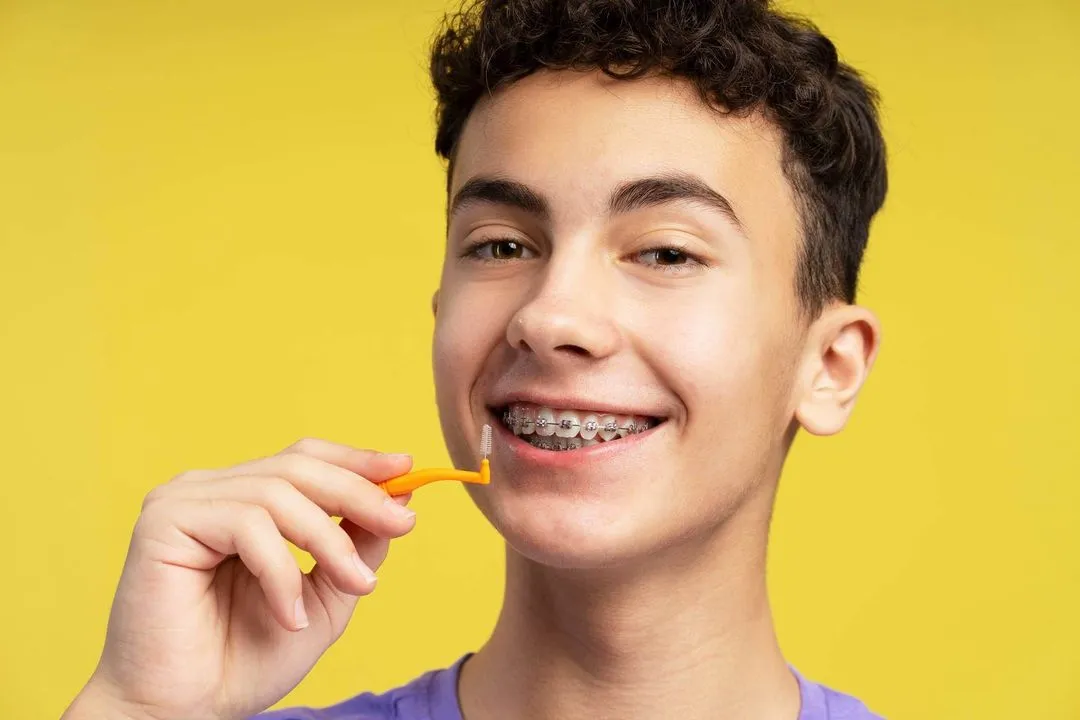
How do I clean my braces?
Brush thoroughly in the morning, at bedtime, and around 20 minutes after each meal. Waiting 20 minutes lets your saliva neutralise the acids produced by eating, which helps protect your enamel from damage.
Use your regular toothbrush as normal to clean all tooth surfaces. The single-tufted brush is ideal for lifting larger food particles from around the brackets, and works especially well around partially erupted or wisdom teeth. The small interdental brush (or Superfloss) acts like floss, cleaning between each tooth, while the larger interdental brush is used under the wire to clean around the sides of each bracket. Finally, a fluoride mouthwash is a great way to reduce the risk of decay — particularly useful at night, or any time a thorough brush isn't possible.
For convenience, keep two sets of these tools: one at home and a portable set — a pencil case works well — so you can keep your braces clean when you're out and about.
Looking after your teeth during treatment
Keeping the area around your braces clean is one of the most important things you can do for your oral health during treatment. When your braces are first fitted, our team will show you exactly how to care for them — and if you ever find it tricky to keep your teeth and braces clean, just ask us for advice. The goal is straight and healthy teeth, not straight but discoloured or decayed ones!
Cleaning your teeth with braces takes a few extra tools and a little more time. Aim for around 3–4 minutes each time — the perfect length for one of your favourite songs.
What you'll need
For cleaning around fixed braces (sometimes called train-tracks) or a fixed retainer (a thin wire bonded behind the front teeth to hold them straight after treatment), we recommend:
- A regular toothbrush with a small head and medium-to-soft bristles
- A single-tufted brush
- Interdental brushes in at least two sizes (small and large)
- Superfloss — a handy alternative to the small interdental brush
- A daily fluoride mouthwash
When to clean
Brush thoroughly in the morning, at bedtime, and around 20 minutes after each meal. Waiting 20 minutes lets your saliva neutralise the acids produced by eating, which helps protect your enamel.
How to use each tool
- Regular toothbrush — use as normal to clean all tooth surfaces.
- Single-tufted brush — great for lifting larger food particles from around the brackets, and especially useful around partially erupted or wisdom teeth.
- Small interdental brush (or Superfloss) — use like floss to clean between each tooth.
- Large interdental brush — guide this under the wire to clean around the sides of each bracket.
- Fluoride mouthwash — a great finishing step to reduce the risk of decay, especially at night or when a full brush isn't possible.
A handy tip: keep two sets of cleaning tools — one at home and a portable set (a pencil case works well) so you can keep your braces clean when you're out and about.

10 Key Tips for Avoiding Bracket Breakages
Broken brackets slow your treatment down, so a little care goes a long way:
- Avoid hard foods — sweets, nuts, ice, hard crusts.
- Skip sticky and chewy foods — toffee, chewing gum, chewy sweets.
- Cut firm foods small — apples, carrots, crusty bread.
- Don't bite in directly — corn on the cob, whole apples, ribs.
- Go gently with crunchy snacks — crisps, popcorn, crackers.
- Cut down on fizzy drinks — they weaken enamel and cause staining.
- Break bad habits — no nail-biting or chewing pens.
- Wear a mouthguard for sport.
- Don't fiddle with your braces.
- Keep up your check-ups.
What food should I avoid with Braces?
With fixed braces, avoid hard, sticky, and chewy foods that can break brackets or bend wires. The main ones to steer clear of are:
- Hard foods — boiled sweets, nuts, ice, and hard crusts
- Sticky and chewy foods — toffee, chewing gum, and chewy sweets
- Crunchy snacks — eat crisps, popcorn, and crackers with care
- Foods you bite straight into — cut apples, carrots, and crusty bread into smaller pieces, and take corn off the cob
- Sugary fizzy drinks — these won't break your braces, but they weaken enamel and can cause staining and decay
Stick to softer foods, chew with your back teeth, and you'll keep your braces intact and your treatment on track. Clear aligners are removable, so you can eat as normal once they're out.
FAQs
Anything hard, sticky or chewy enough to snap a bracket or bend a wire. In practice that means boiled sweets, toffee, chewing gum, hard nuts, ice, crusty bread and crackling.
Whole apples, carrots and corn on the cob are fine if you cut them up first rather than biting straight in.
It is also worth limiting sugary snacks and fizzy drinks, not because they damage the brace but because sugar sitting around a bracket is exactly how enamel gets marked.
Almost everything, with a little adjustment. Soft food for the first few days after fitting, then back to normal apart from the hard and sticky list.
The habit worth building is cutting things up rather than biting into them with the front teeth. Apples, pizza crusts, baguettes and corn are all fine off a fork.
Broken brackets add appointments and add time to treatment, so this is worth taking seriously rather than testing.
Twice a day at minimum, ideally after every meal, and give it a proper two minutes.
Angle the brush to clean above and below each bracket separately rather than sweeping across the middle, and follow the gum line all the way round. Interdental brushes get under the wire and between the teeth where a normal brush cannot reach. A water flosser helps but does not replace brushing.
This is the part that decides whether you finish with clean teeth or permanent white marks. Our hygienist will go through it with you if it is slipping.
About two weeks for most people. The teeth are tender for the first three or four days, the lips and cheeks take a week or so to toughen up, and speech settles within a few days.
By the end of a fortnight most people have stopped noticing them. Orthodontic wax over any bracket that rubs makes the first week considerably easier, and we send you home with some.
Yes, and quicker than you would think. The inside of the lip and cheek is sore for the first week while it adapts to the brackets, then it toughens and stops being an issue.
Use wax on any bracket that is rubbing, and a warm salt water rinse if an ulcer develops. If one particular spot is still raw after a fortnight, ring us, because a bracket may need smoothing.
The first few nights after fitting are the awkward ones. Take a painkiller before bed rather than waiting until it wakes you, and put wax on anything that rubs before you lie down.
After that, braces make no real difference to sleep. If you grind your teeth at night, mention it, because that is worth knowing about during treatment and afterwards when your retainer is made.
Considerably. The first week is soft food only, because biting is genuinely uncomfortable. Within a fortnight most people are eating normally within the restrictions.
Each adjustment brings a day or two of tenderness, and by a few months in most people barely register it.
What does not change is the hard and sticky list. That applies for the whole treatment.
Begin Your Journey
Thinking about it? Book your first consultation and come see us — we'll take it from there.