


What is dentofacial orthopaedics?
Orthodontics moves teeth. Dentofacial orthopaedics influences the jaws that hold them. The two overlap constantly in children, which is why the full title of the specialty is orthodontics and dentofacial orthopaedics.
The distinction matters because some problems are not really about the teeth. If a child's upper jaw is too narrow for the lower one, or the lower jaw sits well behind the upper, straightening the teeth will not fix it. What is needed is to influence how those jaws grow, and that is only possible while growth is still happening.
That window is the whole point. A palatal expander can widen the upper jaw in a nine-year-old over a matter of months. The same correction in an adult, whose palatal suture has fused, needs surgery. Timing here is not a detail, it is the treatment.
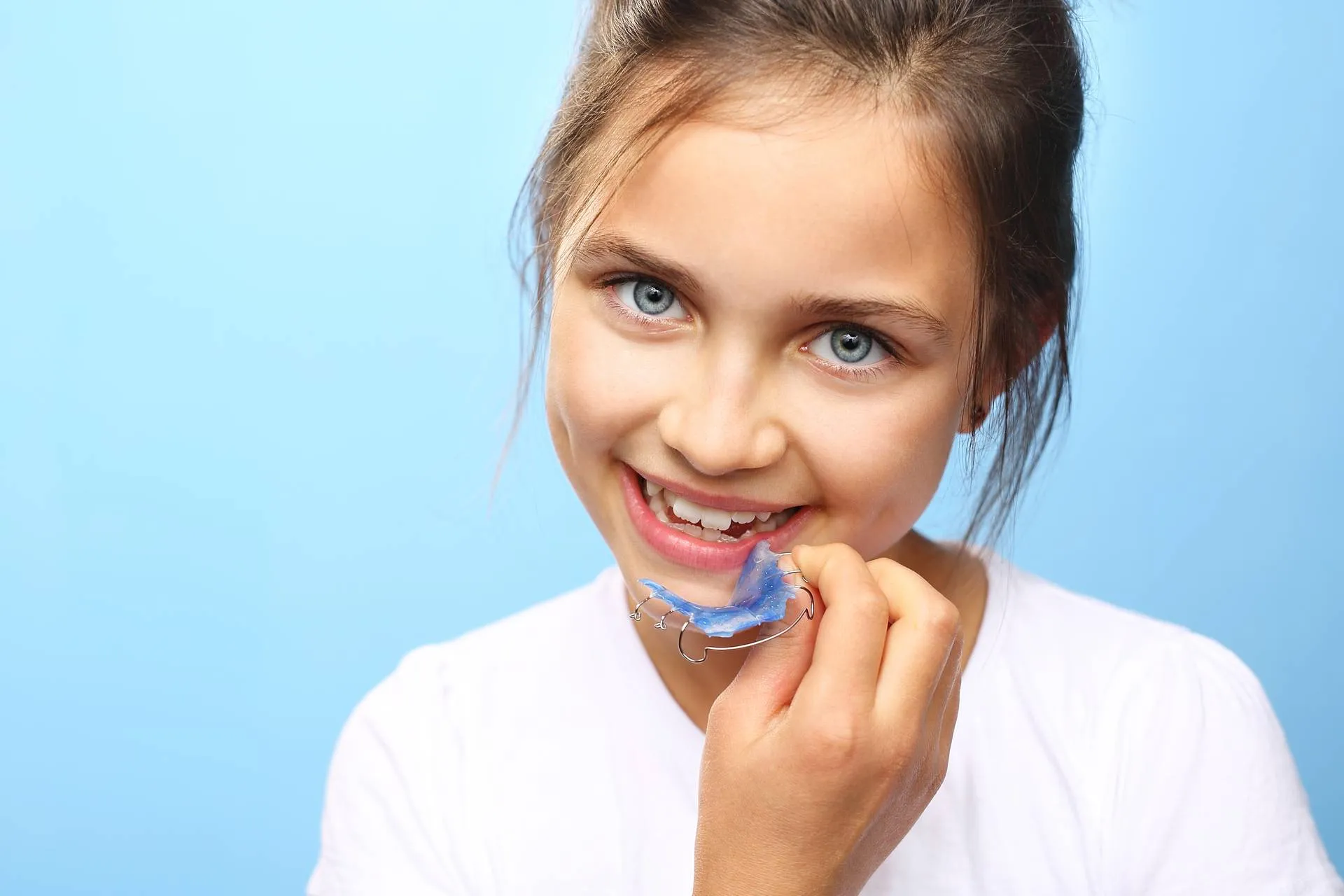
The appliances used include palatal expanders, functional appliances such as the Twin Block, and less commonly headgear or reverse-pull headgear. Which one suits a child depends on what is being corrected and where they are in their growth.
Book a consultation at our Ballinteer Road clinic.
How the appliances work
Palatal expander. Fixed across the roof of the mouth and widened gradually by turning a small screw, usually daily, at home. It opens the join between the two halves of the upper jaw, which then fills with new bone. Active expansion takes weeks. The appliance stays in place for several months afterwards while that bone settles. A gap often appears between the upper front teeth partway through, which is a sign it is working and closes on its own.
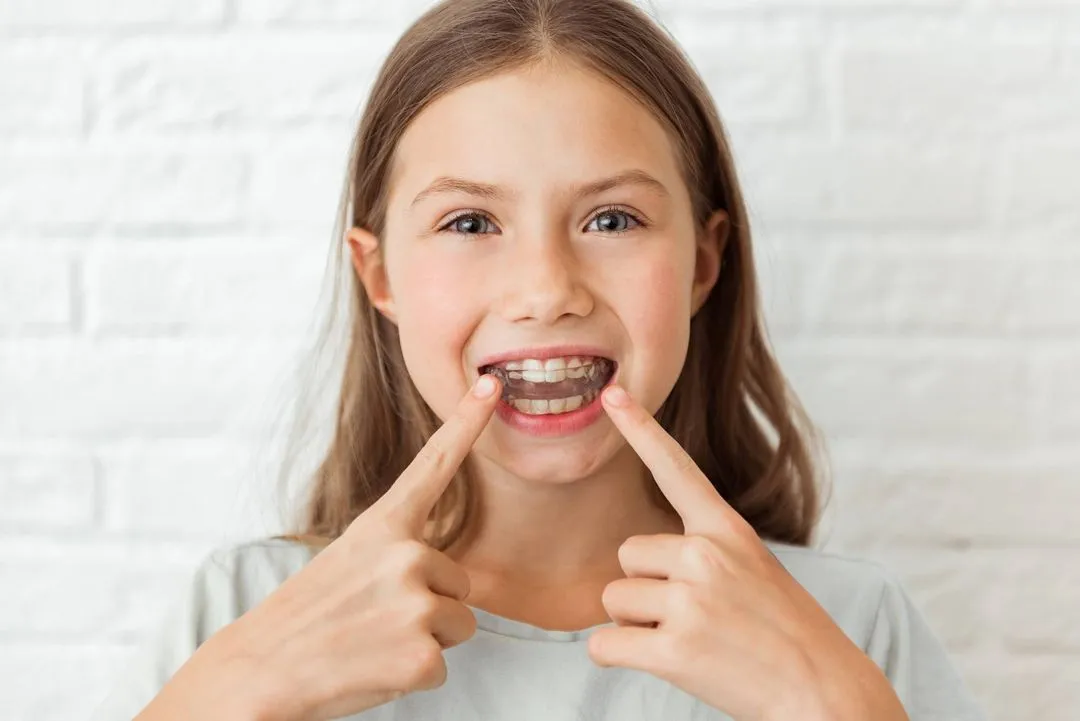
Twin Block. A removable appliance in two parts, upper and lower, with blocks that meet at an angle so the child has to posture the lower jaw forwards in order to bite together. Worn consistently through a growth spurt, it encourages the lower jaw to develop further forward. It is used mainly where the front teeth protrude because the lower jaw sits back, rather than because the upper teeth stick out.
Two things decide whether any of this works. Growth, which nobody controls, and wear time, which the child controls. A Twin Block left in a school bag achieves nothing at all. We are direct with children about that at the start, because there is no point discovering it a year later when the growth spurt has passed.
Treatment of this kind is normally a first phase. Fixed braces usually follow once the adult teeth are all through, to align the teeth within the corrected jaw relationship.
Book a consultation at our Dublin 16 clinic.

What does dentofacial orthopaedic treatment cost?
This kind of treatment is usually one phase of two, so it is worth seeing the whole picture before comparing figures. The appliance phase is quoted separately from any fixed brace treatment that follows, and we will set out both at your consultation, so you know what the full course is likely to involve rather than only the part starting now.
The fee for the appliance phase depends on which appliance is needed and how long it will be worn. You will get a written plan with a firm figure, and nothing is added to it afterwards.
Payment can be spread monthly, interest free, over the treatment, or paid in full at the start for a 5% discount. Orthodontic treatment is tax deductible at 20% and we will provide a completed MED 2 form.
Book a consultation at our Dundrum clinic.


The Process

Book a Consultation
Discuss your goals with one of our specialist orthodontists to find out what treatment option suits you best.
FAQs
A Twin Block is a removable appliance in two parts, upper and lower, with blocks that meet at an angle so the child has to posture the lower jaw forwards in order to bite together.
Worn consistently through a growth spurt, it encourages the lower jaw to develop further forward. It is used mainly where the front teeth protrude because the lower jaw sits back, rather than because the upper teeth stick out. More on our dentofacial orthopaedics page.
Not really. Twin Blocks change the relationship between the jaws rather than aligning individual teeth.
That is why they are almost always a first phase. Fixed braces usually follow once the adult teeth are through, to straighten the teeth within the corrected jaw position. Parents sometimes expect the Twin Block to do the whole job, and it does not.
During the growth spurt, which is usually around eleven to thirteen in girls and twelve to fourteen in boys. Timing matters more here than with almost any other appliance.
Fitted too early and there is not enough growth to work with. Fitted too late and the growth has already gone. That is why we assess children from around age seven and then monitor, so the appliance goes in at the right moment rather than a convenient one.
Full time, which means around the clock including at night, and including meals in most cases. Roughly twenty-two hours a day.
This is the part children find hardest and the part that decides the result. A Twin Block worn only at night will not achieve what the plan assumes.
Usually nine to twelve months of active wear, followed by a period of reduced wear while the new position settles.
Fixed braces then normally follow as a second phase once the adult teeth are all through. We set out both stages at the consultation so you know what the full course involves rather than only the part starting now.
Not painful, but awkward for the first week or two. The jaw muscles ache while they adapt to posturing forwards, speech is affected at first, and eating takes practice.
Almost all children are through that within a fortnight. Saying so in advance helps, because the first few days are when they are most likely to give up on it.
Very little happens, which is the honest answer. The appliance only works while it is in the mouth, and a Twin Block left in a school bag achieves nothing at all.
The problem is that the growth spurt does not wait. Miss it and the opportunity to influence the jaw is gone, leaving camouflage treatment or, in significant cases, surgery later on. We are direct with children about this at the start for exactly that reason.
Some relapse is possible, which is why the appliance is not simply stopped once the bite looks right. Wear is reduced gradually, and fixed braces in the second phase help hold the corrected relationship.
The bigger factor is growth that has not finished. In a child treated early, later growth can change the picture again, and that is one reason we time the appliance to the growth spurt rather than fitting it as soon as a problem is spotted.






Read what our patients say about us
"I went to so many dentists about my bite problem only to be dismissed. Dr Adriana and her team gave me a plan, I followed it, and two and a half years later I can smile, eat and bite properly."

"Two of my daughters had braces fitted by the lovely Dr. Katherine Condren. I would highly recommend her services, she was so good with my daughters, we are extremely happy with the service received and they both have beautiful smiles now."
"My bonded retainer came loose and several other practices turned me away. Dundrum Orthodontics saw me straight away and had it fixed within minutes."
"Dr Joseph O’Connor is such a skilled orthodontist. His kindness and attention to detail is outstanding. He takes the time to explain everything and makes you feel very comfortable. Could not recommend him more."
"I got Invisalign here in my forties and could not be happier. My daughter had braces with them a few years ago, and my sister brought her daughter on my recommendation. Exceptional service and amazing results."
"Joseph is a kind, compassionate and skilled orthodontist. He has a beautiful patient manner and his attention to detail is second to none. Highly recommend."
"Coming to the end of my braces and I couldn't be happier. The whole team are friendly and professional, and they take their time to make sure the end result is exactly what you want."
"I had a great experience with Dr O’Connor and his team. Booking was simple and they were very friendly & efficient throughout. Would highly recommended."
"My son got his braces off this morning and I am delighted with the result. Over two years, any worries we had were sorted and every question answered, always with a friendly and professional approach."
"Amazing service, highly professional. Dr O'Connor was really kind and knowledgeable. Would highly recommend!"
"Dr O'Connor is a brilliant orthodontist, the consultation was thorough and he's easy to talk to."
"Extremely happy with the outcome after braces, great attention to detail! Highly recommend."
"A long and difficult process was made easy by their care and attention. The attention to detail and professionalism was second to none."
"The staff are extremely skilled as well as friendly and easy to talk to. I am very happy with my results and with how the whole process was handled."
Begin Your Journey
Thinking about it? Book your first consultation and come see us — we'll take it from there.