
Under Bite

What is an Under Bite?
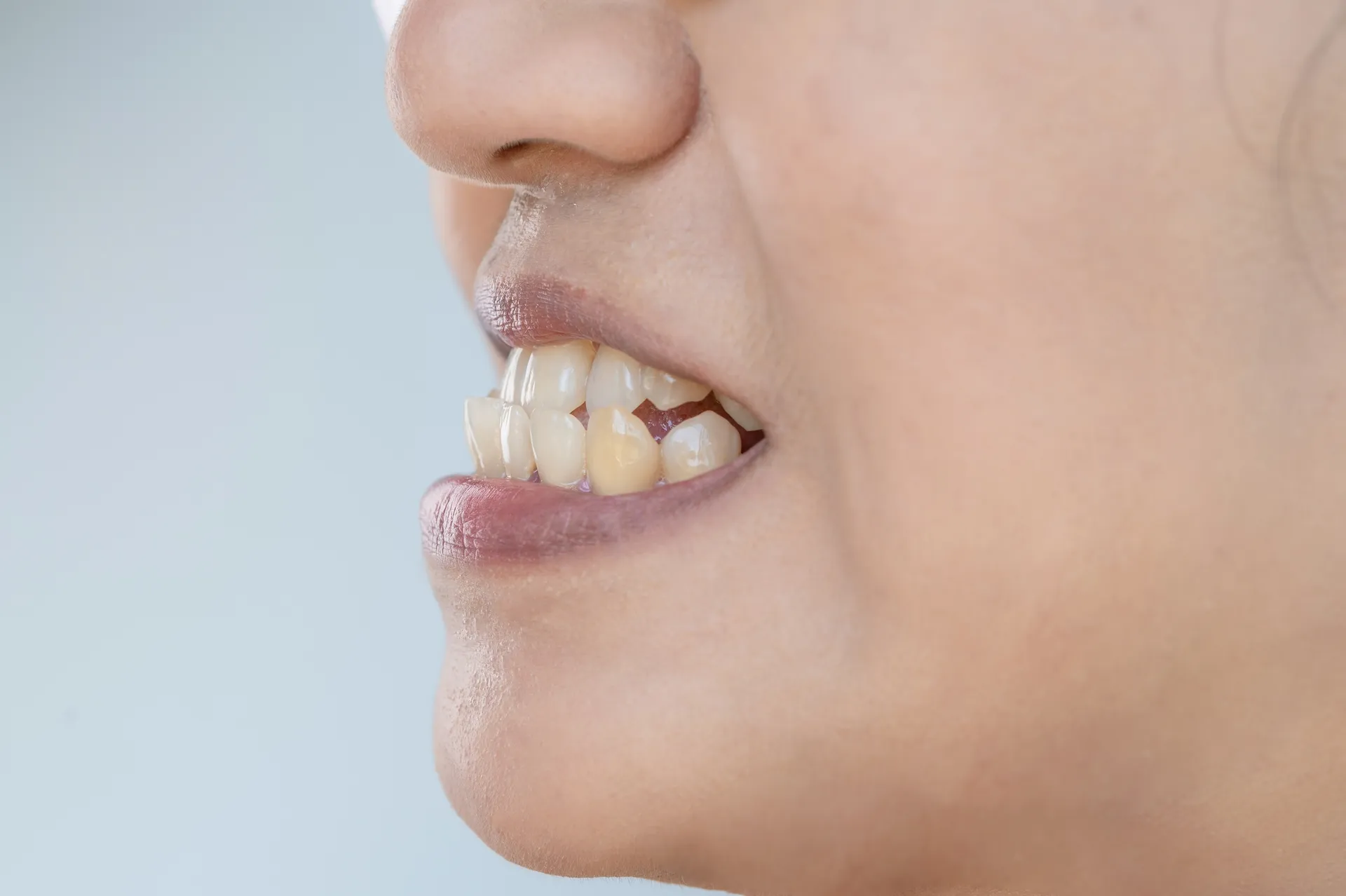
An underbite is a type of malocclusion (bite problem) where the lower front teeth sit in front of the upper front teeth when the mouth is closed, instead of behind them as they normally should. It's the opposite of an overjet, and is sometimes called a Class III bite.
Underbites are usually caused by the way the jaws have grown — most often a lower jaw that is larger or set further forward than the upper jaw, or an upper jaw that is underdeveloped — and they often run in families. As well as affecting the appearance of the face and smile, an underbite can make biting and chewing harder, affect speech and place extra strain on the jaw joints.
Underbites respond well to orthodontic treatment, and are often best addressed early while the jaws are still growing. Depending on the cause and severity, an underbite can be corrected with braces or clear aligners like Invisalign — sometimes with an expander or other appliance in children, and in more severe adult cases with jaw surgery alongside orthodontics — to bring the teeth and jaws into a properly aligned bite. Our specialist orthodontists in Dublin can assess your bite and recommend the most suitable treatment. Book a consultation to get started.
FAQs
An underbite is where the lower front teeth sit in front of the upper front teeth when you bite together, instead of behind them. Orthodontists call it a Class III relationship, or a reverse overjet where the front teeth are concerned.
More on our underbite page.
Nearly always jaw proportion, and it tends to run in families. Either the lower jaw is larger or set further forward, or the upper jaw is underdeveloped and sits back. The second is more common than people assume, and the two are treated differently.
A small number are dental rather than skeletal, where one or two upper front teeth have simply come through behind the lower ones. Those are much simpler to correct.
Often, yes, but within limits. In children, an underdeveloped upper jaw can be brought forward with a reverse-pull appliance while growth is still available, and that is genuine correction rather than camouflage.
In adults, mild underbites can be camouflaged with braces or aligners by tipping the teeth to compensate for where the jaws sit. Beyond that, changing the jaw position itself means orthodontics combined with surgery. We will be straight with you about which side of that line your case falls.
They do not, and it is worth saying so plainly. Jaw exercises, chewing routines and the various tongue exercises promoted online do not move the jawbones and will not correct an underbite. The jaws are bone, not muscle.
What does work is influencing growth in a child with an appliance, moving teeth with braces or aligners, or surgery in significant adult cases.
Usually early, and often earlier than people expect. Where the upper jaw is underdeveloped, treatment around age eight or nine works well because growth can be used. In milder cases the underbite is visible as soon as the adult front teeth arrive.
It is one of the strongest arguments for an assessment at around seven rather than waiting.
It can, and this is the important part. The lower jaw keeps growing later than the upper, and later in boys than in girls, so an underbite that looks mild at twelve can be considerably more pronounced at seventeen.
That is why we often monitor these through the teenage years rather than rushing into treatment that later growth would undo.
Often, yes. A slight underbite that is stable, comfortable to chew with and not causing wear does not have to be treated. Plenty of people have one and never think about it.
The reasons to act are if it is getting worse, if the front teeth are wearing, if chewing is difficult, or if it bothers you. An assessment will tell you which of those applies.
Less common than an increased overjet, but we see it regularly. It is strongly hereditary, so it often shows up across several family members.
Most cases are mild to moderate and treated with orthodontics alone. Only a small proportion are severe enough to need surgery.
A mild dental underbite can be corrected in months. A full orthodontic correction in a teenager or adult usually runs eighteen months to two years.
Early treatment in a child with a reverse-pull appliance is typically nine to twelve months, though fixed braces normally follow later once the adult teeth are through. Cases involving surgery run two to three years across the whole course.

Book a Consultation
Discuss your goals with one of our specialist orthodontists to find out what treatment option suits you best.
Begin Your Journey
Thinking about it? Book your first consultation and come see us — we'll take it from there.