
Clear BracesSandyford

Clear braces for Sandyford patients
Sandyford is a short journey to our Ballinteer Road clinic, and a good proportion of the adults we treat from that side of Dublin ask specifically about ceramic braces. The reason is usually work. If you spend your day in meetings or in front of a camera, a mouthful of metal is a bigger consideration than it might otherwise be.
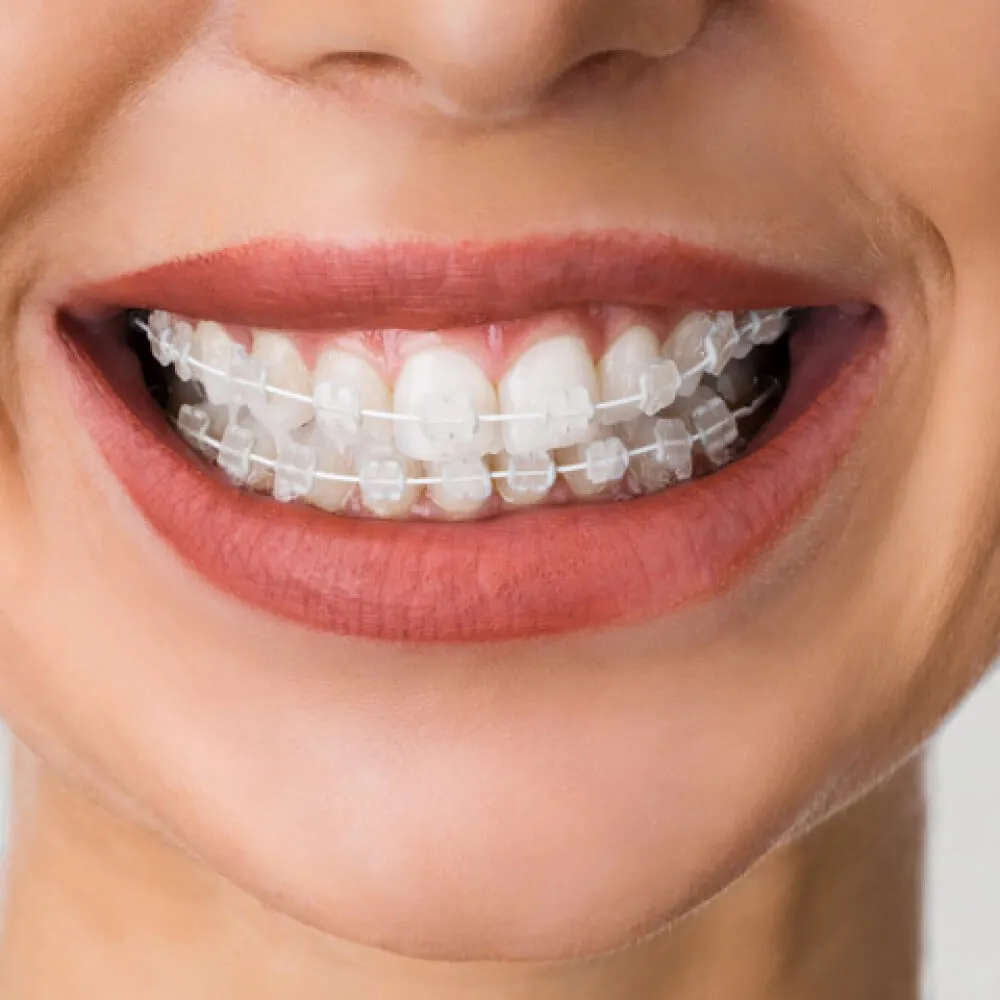
Clear braces are ordinary fixed braces with brackets made of ceramic matched to tooth colour. At conversational distance they largely disappear, and what shows, if anything, is the thin wire.
What you get, and what you give up
You get everything a fixed brace does. Severe rotations, teeth that need moving bodily through bone, substantial bite correction, all of it is within reach in a way it is not with aligners.
What you give up is a little durability. Ceramic is more brittle than steel and a bracket occasionally fractures, which means an extra visit to replace it. If you play contact sport regularly that is worth weighing up.
We will sometimes suggest ceramic on the upper teeth, which are the ones people see, and metal on the lower, which barely show when you speak.
There is more on our clear braces page, or book a consultation.
Parking & Public Transport
The clinic is at 11 The Gables, Ballinteer Road, Dundrum, Dublin 16. The Luas Green Line connects Sandyford directly to Balally and Dundrum, which makes this an easy trip without a car.
Drivers can use the Dundrum Town Centre car park nearby. Directions and parking are on our location and parking page.
Useful Links
Contact Us

The Process

This appointment is really about talking through your goals with one of our orthodontists. We'll likely also go over your dental and medical history, take a look at your teeth and jaw, and depending on what's needed, that might mean X-rays or impressions of your teeth to make models.

From there, the orthodontist looks over the X-rays, photos, and examination findings and puts together a plan specific to you — how your teeth need to move to get where they should be. You'll come away with an idea of how long treatment will take, what it'll cost, and whether any prep work needs to happen first.
.svg)
That might mean a dental cleaning, sorting out any cavities or other issues first, or in some cases extracting a tooth or two to make room for things to shift. Once that's all sorted, you're ready to move on to the next phase.

The orthodontist attaches small bumps to your teeth that help the aligners grip properly, then hands over your first set. We'll check the fit there and then, and walk you through everything you need to know to get started.

You'll come in for progress checks fairly regularly — usually every 8 to 10 weeks — where the orthodontist checks how the aligners are fitting and lets you know if it's time to order the next set.

Taking everything off is usually the easy part — the attachments and wires come out, any leftover adhesive gets cleaned away, and it's over quickly with little to no discomfort.

Once your braces come off, a retainer is what keeps your teeth from drifting back. Most patients wear one full time for a while, then switch to nights only — that's what keeps everything holding in place long-term. Read more here.

Read what our patients say about us
"I went to so many dentists about my bite problem only to be dismissed. Dr Adriana and her team gave me a plan, I followed it, and two and a half years later I can smile, eat and bite properly."

"Two of my daughters had braces fitted by the lovely Dr. Katherine Condren. I would highly recommend her services, she was so good with my daughters, we are extremely happy with the service received and they both have beautiful smiles now."
"My bonded retainer came loose and several other practices turned me away. Dundrum Orthodontics saw me straight away and had it fixed within minutes."
"Dr Joseph O’Connor is such a skilled orthodontist. His kindness and attention to detail is outstanding. He takes the time to explain everything and makes you feel very comfortable. Could not recommend him more."
"I got Invisalign here in my forties and could not be happier. My daughter had braces with them a few years ago, and my sister brought her daughter on my recommendation. Exceptional service and amazing results."
"Joseph is a kind, compassionate and skilled orthodontist. He has a beautiful patient manner and his attention to detail is second to none. Highly recommend."
"Coming to the end of my braces and I couldn't be happier. The whole team are friendly and professional, and they take their time to make sure the end result is exactly what you want."
"I had a great experience with Dr O’Connor and his team. Booking was simple and they were very friendly & efficient throughout. Would highly recommended."
"My son got his braces off this morning and I am delighted with the result. Over two years, any worries we had were sorted and every question answered, always with a friendly and professional approach."
"Amazing service, highly professional. Dr O'Connor was really kind and knowledgeable. Would highly recommend!"
"Dr O'Connor is a brilliant orthodontist, the consultation was thorough and he's easy to talk to."
"Extremely happy with the outcome after braces, great attention to detail! Highly recommend."
"A long and difficult process was made easy by their care and attention. The attention to detail and professionalism was second to none."
"The staff are extremely skilled as well as friendly and easy to talk to. I am very happy with my results and with how the whole process was handled."

Book a Consultation
Discuss your goals with one of our specialist orthodontists to find out what treatment option suits you best.
FAQs
Yes, and that is the main reason to consider them. Ceramic braces work identically to metal ones. Same mechanics, same wire doing the work, same range of cases.
Anything metal braces can correct, ceramic braces can correct, including severe rotations, heavy crowding and substantial bite correction. More on our clear braces page.
Far less noticeable than metal, though not invisible. The brackets are ceramic, matched to tooth colour, so at conversational distance they largely disappear.
What does show is the wire running across them, which is still metal. People looking closely will see you are wearing braces. People across a table generally will not.
Broadly the same as metal braces, typically eighteen months to two years depending on the case.
The one thing that can add time is a fractured bracket. Ceramic is more brittle than steel, and a broken bracket means an extra visit to replace it. It is not common, but it happens more often than with metal.
No. The force moving your teeth is the same, so the tenderness for three or four days after fitting and after each adjustment is the same too.
Ceramic brackets are slightly bulkier than metal ones, so some people find they take a little longer to get used to against the lip and cheek. Orthodontic wax handles that in the first week.
The ceramic brackets do not. This is the question we get asked most about clear braces and the answer is reassuring.
What can discolour are the small clear elastic rings holding the wire into each bracket. Coffee, tea, red wine and curry are the usual culprits. Those rings are replaced at every appointment, so any staining lasts weeks rather than the whole treatment. If it bothers you, ask for a tinted ring instead of a clear one.
Yes, in the same way metal braces do. Small elastic rings hold the archwire into each bracket, and with ceramic braces those are usually clear or tooth-coloured so the whole appliance stays discreet.
Separately, some cases need elastics running between the upper and lower teeth to correct the bite. That applies whichever type of bracket you have.
Three, and we would rather set them out than have you find them later.
They are more brittle than metal, so brackets fracture occasionally and need replacing, which means an extra visit. They are slightly bulkier against the lip. And they cost a little more than metal.
If you play contact sport regularly, those first two are worth weighing carefully. For most adults the trade is worth making.
A little more than metal braces, because the brackets cost more to make and occasionally need replacing during treatment. The difference is not large.
There is a middle option worth knowing about: ceramic on the upper teeth, which are the ones people see, and metal on the lower, which barely show when you speak. That comes in below full ceramic and looks much the same.
You will get a written plan with a firm figure at your consultation.
It depends on your case and on what you want from treatment.
Clear braces are fixed, so they work around the clock with nothing to remember, and they handle difficult movements better. Invisalign is removable and more discreet, but only works while it is in your mouth, around twenty-two hours a day.
If your case is complex, ceramic braces are usually the safer choice. If it is straightforward and you want maximum discretion, aligners suit better. We will tell you at the consultation which we would recommend and why.
None of them is meaningfully faster than the others. Treatment time is set by how far your teeth have to move and by biology, not by the appliance. Bone remodels at the rate it remodels, and pushing harder does not speed it up.
Where real differences appear is in how predictably an appliance handles a particular movement. Fixed braces often finish complex cases sooner than aligners simply because they get there more directly.
The genuinely quick option is a short front-teeth course such as Braces Lite, and that is quick because it treats less, not because it works faster.
Usually because you are seeing them properly for the first time. Crowded or overlapping teeth hide part of each crown, and once they are aligned the full tooth shows.
Sometimes the gum line is uneven after treatment, which exaggerates the effect. That often settles over the following months as the gums adapt.
If it persists and bothers you, your dentist can reshape the gum line slightly. Mention it at your review rather than assuming nothing can be done.
Begin Your Journey
Thinking about it? Book your first consultation and come see us — we'll take it from there.