
Kids BracesSandyford

Children's braces for Sandyford families
We see a steady stream of children from Sandyford and the surrounding area, most referred by their own dentist, though you do not need a referral to book.
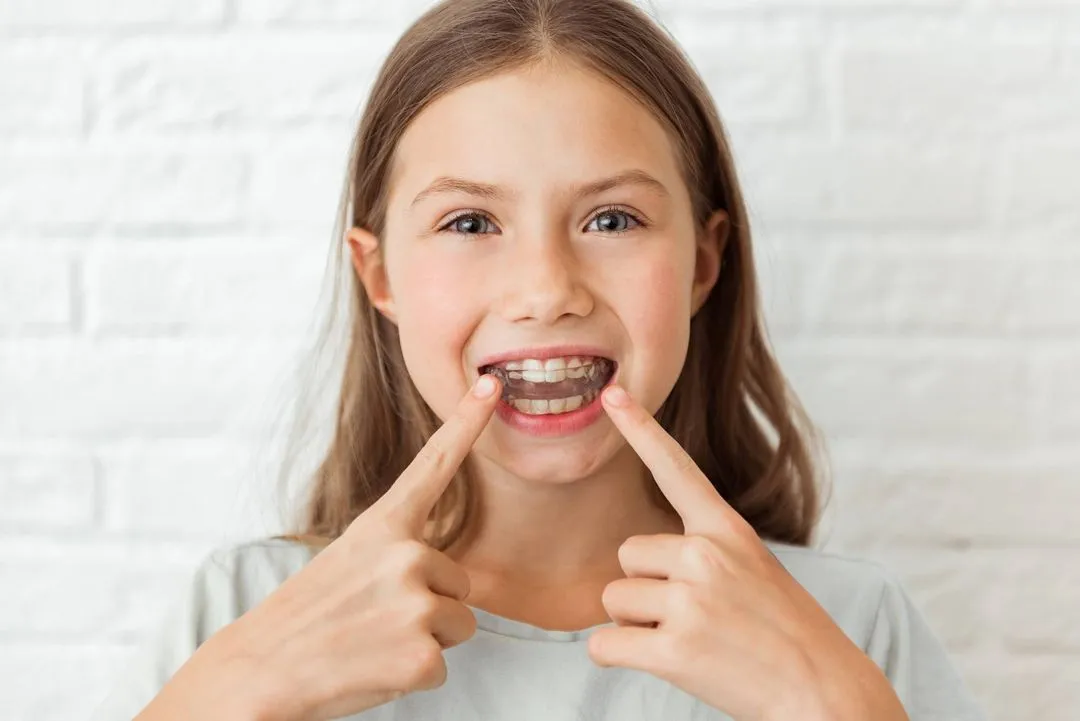
Children's braces do two jobs. They straighten teeth that came through crowded or out of line, and they correct how the upper and lower teeth meet. The second matters more than parents expect, because a bite that does not fit properly wears teeth unevenly for decades.
What to expect
Fitting takes about an hour. After that, adjustments every six to eight weeks, usually twenty minutes. Most children finish in eighteen months to two years, then move to retainers.
The one thing that decides how well it goes is cleaning. Plaque left around a bracket leaves permanent white marks, and those do not come off when the brace does.
More on our children's braces page, or book a consultation.
Parking & Public Transport
The clinic is at 11 The Gables, Ballinteer Road, Dundrum, Dublin 16. The Luas Green Line connects Sandyford directly to Balally and Dundrum, which makes this an easy trip without a car.
Drivers can use the Dundrum Town Centre car park nearby. Directions and parking are on our location and parking page.
Useful Links
Contact Us

The Process

This appointment is really about talking through your goals with one of our orthodontists. We'll likely also go over your dental and medical history, take a look at your teeth and jaw, and depending on what's needed, that might mean X-rays or impressions of your teeth to make models.

From there, the orthodontist looks over the X-rays, photos, and examination findings and puts together a plan specific to you — how your teeth need to move to get where they should be. You'll come away with an idea of how long treatment will take, what it'll cost, and whether any prep work needs to happen first.
.svg)
That might mean a dental cleaning, sorting out any cavities or other issues first, or in some cases extracting a tooth or two to make room for things to shift. Once that's all sorted, you're ready to move on to the next phase.

The orthodontist attaches small bumps to your teeth that help the aligners grip properly, then hands over your first set. We'll check the fit there and then, and walk you through everything you need to know to get started.

You'll come in for progress checks fairly regularly — usually every 8 to 10 weeks — where the orthodontist checks how the aligners are fitting and lets you know if it's time to order the next set.

Taking everything off is usually the easy part — the attachments and wires come out, any leftover adhesive gets cleaned away, and it's over quickly with little to no discomfort.

Once your braces come off, a retainer is what keeps your teeth from drifting back. Most patients wear one full time for a while, then switch to nights only — that's what keeps everything holding in place long-term. Read more here.

Read what our patients say about us
"I went to so many dentists about my bite problem only to be dismissed. Dr Adriana and her team gave me a plan, I followed it, and two and a half years later I can smile, eat and bite properly."

"Two of my daughters had braces fitted by the lovely Dr. Katherine Condren. I would highly recommend her services, she was so good with my daughters, we are extremely happy with the service received and they both have beautiful smiles now."
"My bonded retainer came loose and several other practices turned me away. Dundrum Orthodontics saw me straight away and had it fixed within minutes."
"Dr Joseph O’Connor is such a skilled orthodontist. His kindness and attention to detail is outstanding. He takes the time to explain everything and makes you feel very comfortable. Could not recommend him more."
"I got Invisalign here in my forties and could not be happier. My daughter had braces with them a few years ago, and my sister brought her daughter on my recommendation. Exceptional service and amazing results."
"Joseph is a kind, compassionate and skilled orthodontist. He has a beautiful patient manner and his attention to detail is second to none. Highly recommend."
"Coming to the end of my braces and I couldn't be happier. The whole team are friendly and professional, and they take their time to make sure the end result is exactly what you want."
"I had a great experience with Dr O’Connor and his team. Booking was simple and they were very friendly & efficient throughout. Would highly recommended."
"My son got his braces off this morning and I am delighted with the result. Over two years, any worries we had were sorted and every question answered, always with a friendly and professional approach."
"Amazing service, highly professional. Dr O'Connor was really kind and knowledgeable. Would highly recommend!"
"Dr O'Connor is a brilliant orthodontist, the consultation was thorough and he's easy to talk to."
"Extremely happy with the outcome after braces, great attention to detail! Highly recommend."
"A long and difficult process was made easy by their care and attention. The attention to detail and professionalism was second to none."
"The staff are extremely skilled as well as friendly and easy to talk to. I am very happy with my results and with how the whole process was handled."

Book a Consultation
Discuss your goals with one of our specialist orthodontists to find out what treatment option suits you best.
FAQs
For full treatment, usually eleven to thirteen, once most of the adult teeth are through. That is when braces can align the whole arch rather than working around baby teeth that are about to fall out.
Some problems are better treated earlier, roughly eight to ten, and a few are better left until growth has finished. There is no single right age, which is exactly why assessment at seven and monitoring afterwards works better than picking a birthday.
Almost everything, with a little adjustment. Soft food for the first few days after fitting, then back to normal apart from the hard and sticky list.
The habit worth building is cutting things up rather than biting into them with the front teeth. Apples, pizza crusts, baguettes and corn are all fine off a fork.
Broken brackets add appointments and add time to treatment, so this is worth taking seriously rather than testing.
It depends on what your child actually needs. A single-arch early correction and a full two-arch treatment run over two years are very different pieces of work.
Most parents spread the cost monthly, interest free, across the treatment. There is a discount for settling the fee in full at the start, and orthodontic treatment qualifies for 20% tax relief through the MED 2 form.
You will get a written plan with a firm figure after the assessment, covering the appliance, every appointment including emergencies, and the first set of retainers.
Most comprehensive treatments run eighteen months to two years. Simpler cases finish sooner, and a short front-teeth course such as Braces Lite is usually six to nine months.
What sets the timescale is how far the teeth have to move and whether the bite needs correcting, not which appliance is used. Cases involving jaw surgery run longest, two to three years across the whole course.
You will get a realistic estimate at your consultation rather than a best-case one.
Rarely full braces, and almost never the full set. At seven there are still baby teeth in place, so treating the whole arch makes no sense.
What a seven-year-old can have is limited early treatment where there is a clear reason: a palatal expander for a narrow upper jaw, correction of a crossbite causing the jaw to shift, or protecting a badly protruding front tooth.
Most seven-year-olds we see need nothing at all yet, and we simply keep an eye on how things develop.
An assessment is the only reliable way, but there are things parents notice: teeth coming through crowded or twisted, front teeth that stick out or do not meet, a jaw that shifts to one side when biting, difficulty chewing, or baby teeth lost much earlier or later than expected.
Thumb sucking continuing past five or six is worth mentioning too.
None of those automatically means treatment. They mean it is worth having someone look. Book a consultation at our Dundrum clinic.
If there is a clinical reason, yes, and the health argument is stronger than the appearance one. A bite that does not fit together wears teeth unevenly and is harder to clean for the rest of their life.
What matters as much is whether your child is on side. Treatment runs eighteen months to two years and depends on them cleaning properly and, for some appliances, wearing them consistently. A child who has been pushed into it tends not to do either.
We talk to the child as well as the parent at the consultation for that reason.
Most children finish in eighteen months to two years with full fixed braces.
Early treatment with an expander or a functional appliance is shorter, often nine to twelve months, though a second phase with braces usually follows once the adult teeth are through.
Two things lengthen it: broken brackets from hard or sticky food, and appliances not being worn. Neither is inevitable, and we will tell you honestly at each visit how it is tracking.
The first week, without much competition. The teeth are tender for three or four days after fitting, and at the same time the lips and cheeks are getting used to the brackets.
After that it gets easier. Adjustments cause a day or two of tightness rather than the same soreness, and by a few months in most people barely notice them.
The end is straightforward. Taking braces off is not uncomfortable.
Every six to eight weeks for fixed braces. The appointments are short, usually around twenty minutes, and mostly involve changing the wire and the elastics.
Aligner reviews are less frequent, every eight to ten weeks. Appliances such as expanders are seen more often at the start while they are being adjusted.
We do our best to work around school where we can, so ask reception when you book.
Not painful, but the teeth are tender for three or four days after fitting and again briefly after each adjustment. Soft food and ordinary paracetamol or ibuprofen handle it.
The other thing children notice in the first week is the brackets rubbing the inside of the lip. Orthodontic wax sorts that, and the tissues toughen up quickly.
Telling a child what to expect beforehand makes a real difference to how they cope with the first few days.
Begin Your Journey
Thinking about it? Book your first consultation and come see us — we'll take it from there.